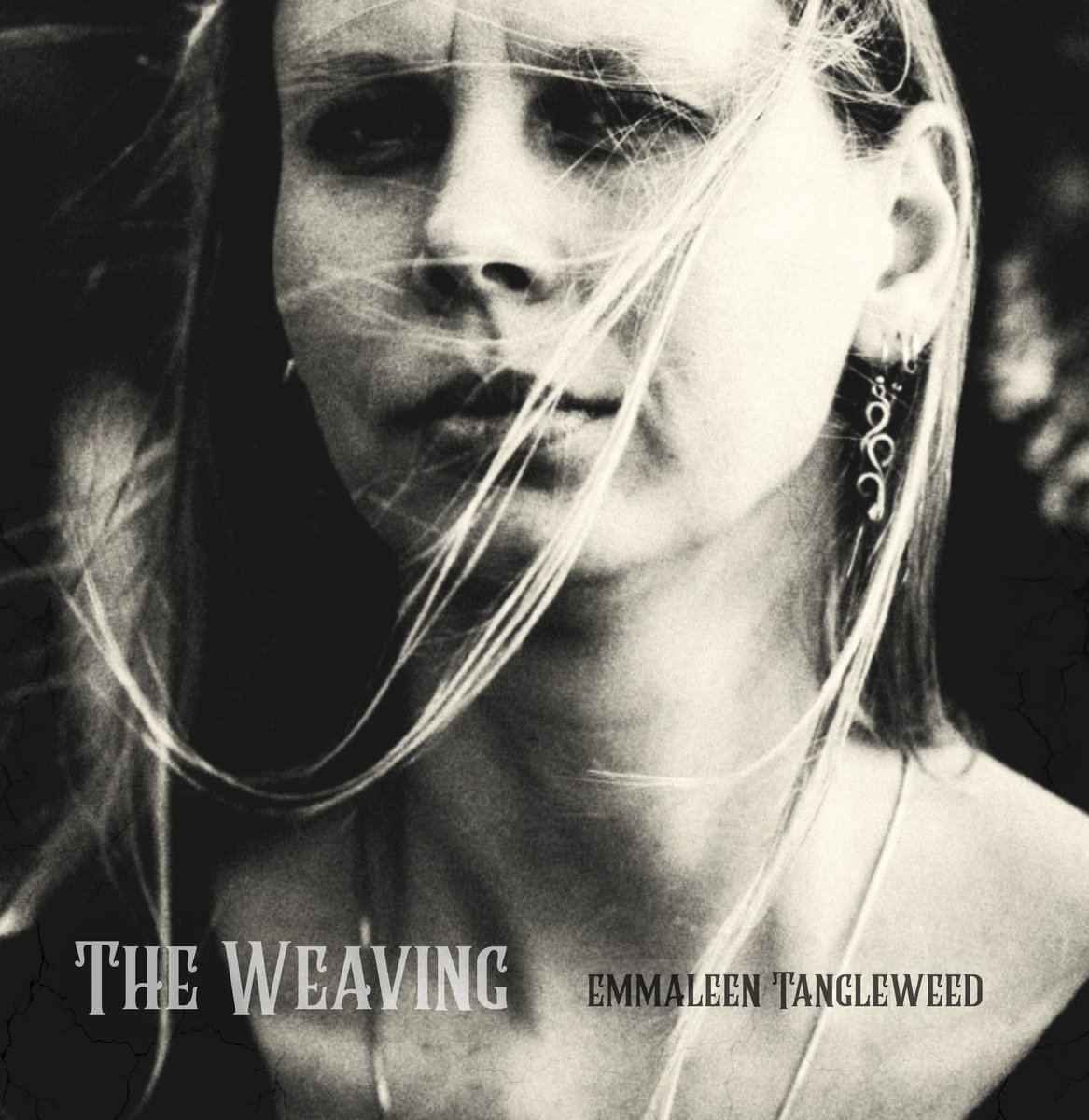
One interesting part of making an album is deciding on its running order. Especially when there is more material than can be released, musicians spend a great deal of time choosing what to include, what to leave out and how one song should lead into the next. For me as a listener, that order is crucial in the journey of discovery. In that sense, I discovered Emmaleen Tangleweeds The Weaving twice: first from “The Hours” to “3 oclock”, and then, by accident, in reverse.
Played forward, the album begins in political territory. “The Hours” turns immigration into a haunted borderland of waiting rooms, bureaucracy and ancestors. By the time “Never-Ending History” arrives, history has become a cycle that people seem condemned to repeat. Its slow, crawling delivery makes that repetition feel almost physically painful. In that sense, both songs belong to the political tradition of the blues. They do not argue through slogans, but show how power and history enter peoples lives, bodies and memories.
From there, the album moves towards more intimate forms of pain. “Language of the Hands” approaches mental illness through images of confinement and bruises, before “3 oclock” ends the album with a melancholic encounter between a father and his estranged (or probably never known) son. The mythology has fallen away, leaving two people in a pain that can no longer remain hidden. Played backwards, this movement changes. That intimate encounter gradually gives way to mental illness, collective history and colonial memory, until we arrive at the uncertain world of “The Hours”. It feels as if a personal memory is moving further and further away. Dont get me wrong: “The Hours” is a wonderful and relatively direct opener, and that is where it belongs. But it also works surprisingly well as an ending.
Perhaps that is possible because of the albums most important principle: space.
This becomes clearest on “Ask the Dust”, my personal highlight. It begins with little more than three repeated notes: heavy, bluesy and wooden. Slide guitar, banjo and stomping feet slowly join in. Everything is there, but nothing fights for attention. The simple foundation leaves enough room for every small change to feel important. When the song becomes denser around its middle, it hits with real force. It suits these songs that many of them are closer to five minutes than three. They need that time. Not because they are packed with different parts, but because their few ideas are allowed to settle, grow and slowly change. On The Weaving, patience is part of the arrangement. “Language of the Hands”, released with a video ahead of the album, is another highlight. Lliezel Ellicks cello gives the song a dark pull, just as it does on “Never-Ending History”. With its brooding, low-circling cello line, the song (Language of the Hands) recalls 16 Horsepower, not as a direct quote, but in the way a simple folk figure becomes tense and almost physical. Then there is this clearly audible intake of breath that remained on the recording: one last gathering of strength before the song enters its final passage. It is a small moment, but it makes the transition feel remarkably human.
Musically, The Weaving sits somewhere between old blues storytelling, Gothic folk and the darker side of Americana. Slide guitar, banjo, acoustic guitar, cello and boots hitting the floor give it this organic and dense quality. Recorded in a log cabin it has a physical character of its own. You do not just hear the idea of a wooden cabin, you hear the wood itself: a dry sound, short reflections and instruments with plenty of punch. At the centre is Emmaleen Tangleweeds voice. It is deep and penetrating, with deliberate phrasing that gives every line weight. But when a story calls for it, she pulls back and becomes quieter and more thoughtful. She does not simply sing above the instruments. Instead she inhabits the same small wooden room with them. We are invited to listen to her while she moves between the lyrical topics. These are not merely dark subjects used to create an atmosphere. Each song builds its own small narrative world around them. Great Stuff.
The Weaving offers blues, great guitar playing and strong storytelling without ever becoming overcrowded. Vinyl and cassette editions have been released through UK label Cruel Nature Records.
| Artist | Emmaleen Tangleweed |
| Record | The Weaving |
| Release date | 31.07.2026 |
| Label | Cruel Nature Records |
| Links | Instagram Bandcamp |